
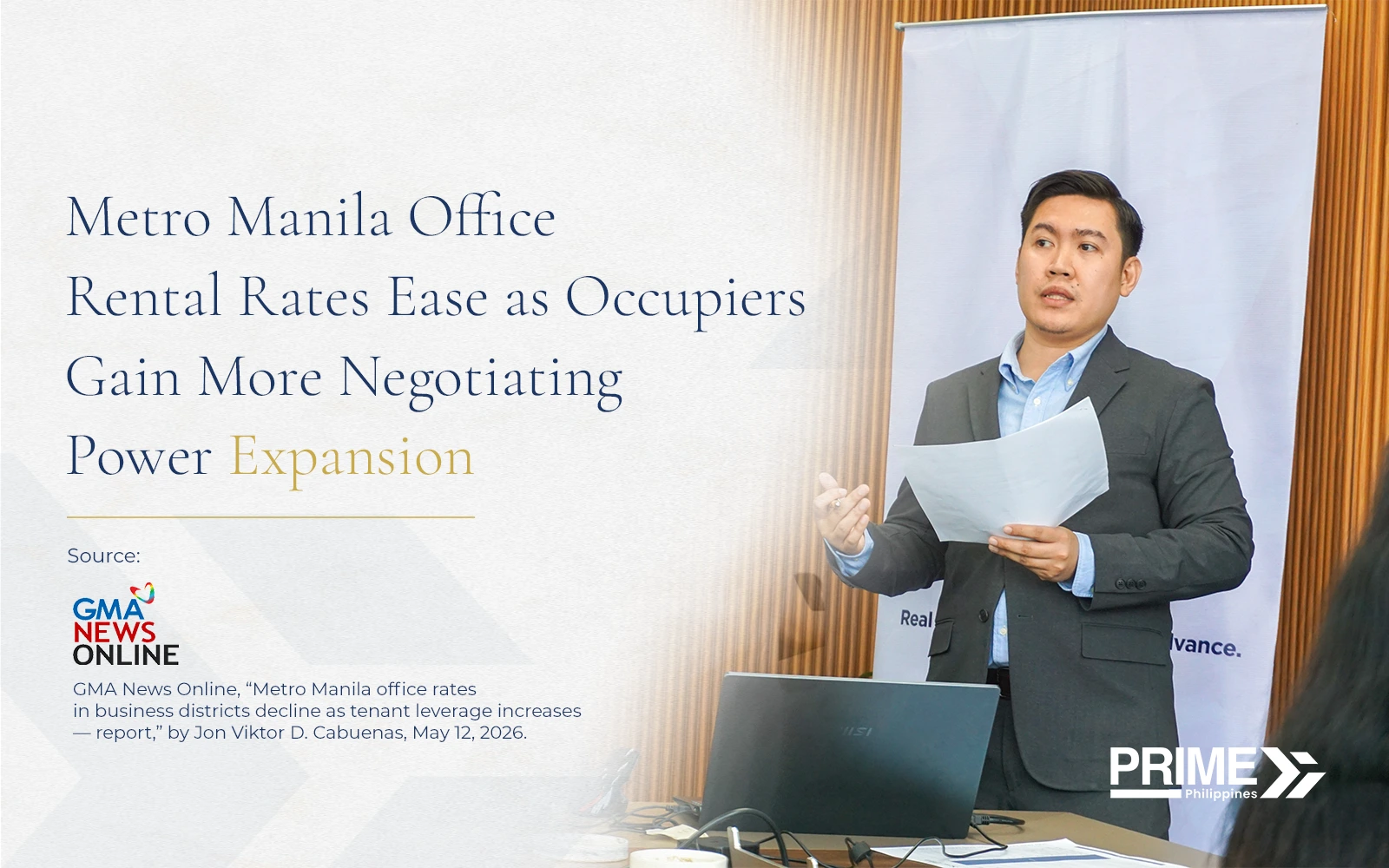
Metro Manila’s office market continued to shift in favor of occupiers during the first quarter of 2026 as rental rates eased amid elevated vacancy levels and increasing competition among landlords.
According to a report published by GMA News Online, citing data from PRIME Philippines, the decline in office rental rates reflects changing market dynamics as businesses gain stronger negotiating leverage when securing office spaces across key business districts.
The trend highlights the ongoing evolution of the office sector, where occupiers are becoming more selective and landlords are adapting leasing strategies to remain competitive.
Tenant-Friendly Market Conditions Persist
As office inventory remains elevated across Metro Manila, businesses are benefiting from a wider range of leasing options and more flexible rental arrangements.
Many landlords are offering competitive incentives, including rent-free periods, fit-out support, flexible lease structures, and customized terms to attract and retain tenants.
These conditions have provided occupiers with greater bargaining power, allowing companies to optimize occupancy costs while exploring opportunities to upgrade to higher-quality office environments.
For organizations evaluating relocation, expansion, or workplace modernization plans, the current market presents favorable conditions for securing strategically located office spaces.
Workplace Strategies Continue to Influence Demand
The office sector continues to adjust to evolving workplace preferences as companies refine their long-term real estate strategies.
Hybrid work arrangements remain a key consideration for many organizations, prompting businesses to reassess office space requirements and prioritize efficiency, collaboration, and employee experience.
As a result, demand has become increasingly focused on buildings that offer flexibility, accessibility, modern amenities, and workplace environments that support productivity and talent retention.
This shift has encouraged occupiers to focus on value rather than simply space requirements.
Premium Buildings Remain Competitive
Despite softer rental rates across the broader market, premium office developments continue to attract steady demand.
Grade A office buildings with strong locations, modern facilities, sustainability features, and efficient property management remain preferred choices among multinational corporations, business process outsourcing firms, technology companies, and professional service providers.
Landlords of premium assets continue to invest in building enhancements and tenant-focused amenities to maintain competitiveness in an increasingly selective market.
Rising Competition Shapes Leasing Strategies
The continued delivery of new office developments has expanded available inventory throughout Metro Manila, creating a more competitive leasing landscape.
As landlords compete for tenants, many are prioritizing occupancy retention through proactive leasing strategies and improved tenant engagement initiatives.
Industry observers note that maintaining long-term tenant relationships has become increasingly important as businesses gain more options when evaluating office locations.
This competitive environment is expected to continue influencing rental rates and leasing activity in the near term.
Outlook for Metro Manila’s Office Market
While rental rates may remain under pressure in the short term, the office sector continues to demonstrate resilience as businesses adapt to changing workplace needs and economic activity remains active.
Demand from outsourcing firms, multinational corporations, financial institutions, and emerging industries is expected to support future office absorption across major business districts.
For occupiers, the current environment presents opportunities to secure favorable lease terms and high-quality office spaces. For landlords, long-term success will depend on flexibility, tenant retention, and the ability to deliver value beyond rental pricing.
Source
This article is based on information reported by GMA News Online, citing market data and insights from PRIME Philippines regarding Metro Manila office rental rates, vacancy trends, landlord strategies, and tenant demand during the first quarter of 2026.